
Dental Implant PRF Technique: How It Works
Wondering how clinics speed up healing after implant surgery? The dental implant PRF technique uses a concentrate made from your own blood to accelerate bone and soft tissue recovery. Read our full explanation of how it works below.
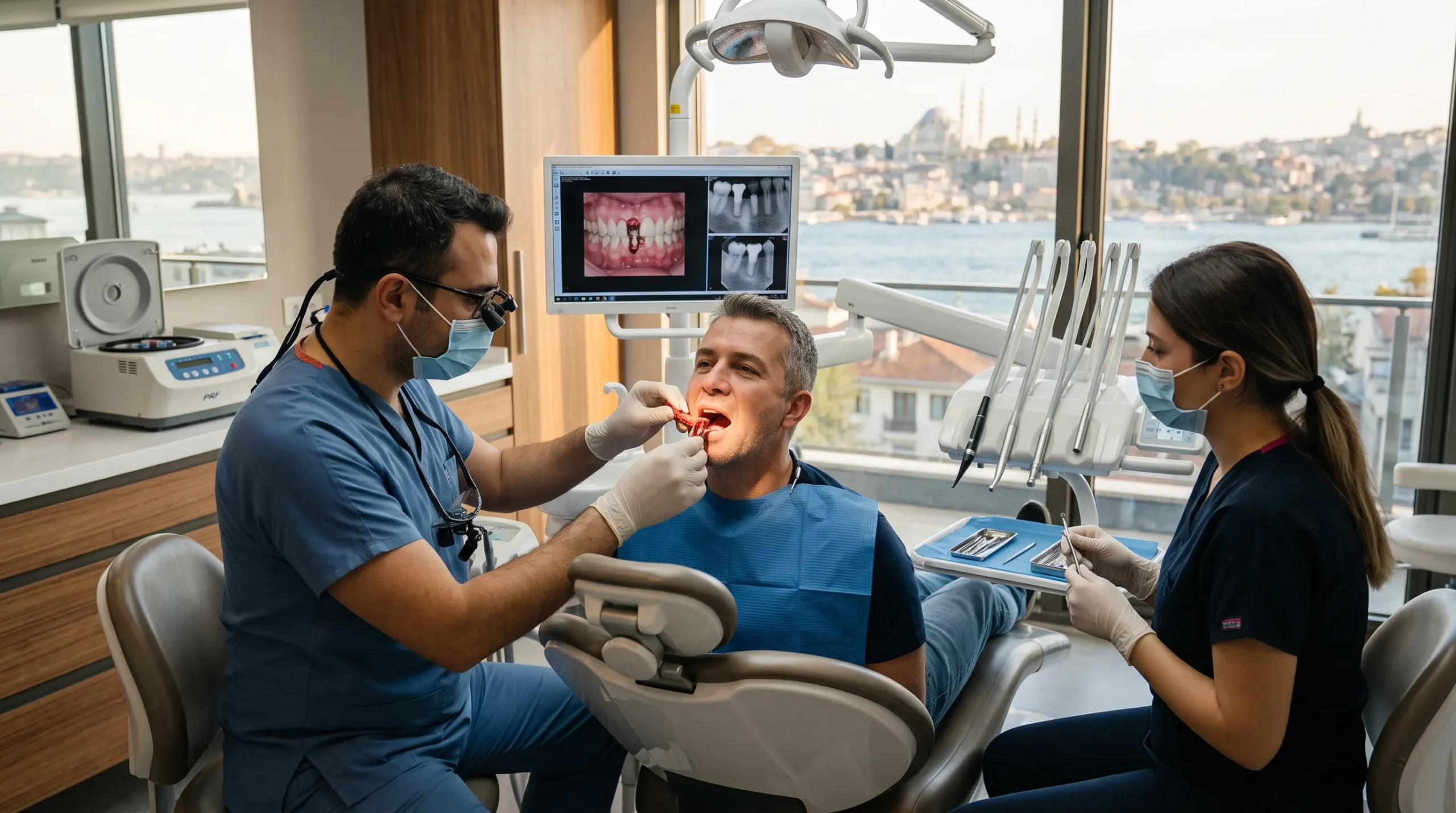
What Is PRF and How Is It Made?
PRF stands for platelet-rich fibrin, a concentrate derived entirely from a small sample of the patient’s own blood. A published clinical review on implant dentistry explains that PRF is produced by spinning the blood in a centrifuge without adding anticoagulants, which naturally separates it into a fibrin matrix dense with platelets, white blood cells, and growth factors.1 Because nothing artificial is added, the dental implant PRF technique is considered a fully autologous, biologically driven approach to healing—there’s no synthetic material or donor tissue involved at any stage.
How Does the Dental Implant PRF Technique Work?
- 1. Blood Draw: A small sample of your blood is taken chairside, similar to a routine blood test, right before or during your implant procedure.
- 2. Centrifugation: The sample is spun in a centrifuge for several minutes, separating it into layers and forming a solid fibrin membrane rich in growth factors.
- 3. Membrane Preparation: The fibrin layer is compressed into a membrane or plug, ready to be placed exactly where it’s needed.
- 4. Application at the Implant Site: The PRF is packed into the implant socket, layered under the gum, or used alongside a bone graft to support faster, more stable healing.
This entire process happens within the same visit—there’s no waiting period for lab processing, which is part of why the dental implant PRF technique integrates so easily into same-day implant surgery. To support natural tissue healing, our surgeons apply this technique routinely; read our companion guide to the PRF dental implant technique for a closer look at the clinical protocol.
Benefits of Using PRF With Dental Implants
Research on implant dentistry has linked the dental implant PRF technique to several measurable advantages:
- Faster Osseointegration: A 2025 clinical overview describes how PRF supplies growth factors that stimulate osteoblast activity, helping bone bond to the implant surface more efficiently.2
- Improved Soft Tissue Healing: The same research notes that PRF supports healthier gum tissue around the implant site, which can reduce visible scarring and swelling.
- Lower Post-Operative Discomfort: Because PRF comes from the patient’s own blood, the body tends to tolerate it exceptionally well, with fewer inflammatory reactions than synthetic alternatives.
- Reduced Reliance on Additional Bone Grafts: In many cases, PRF can be combined with a smaller graft volume, or occasionally used on its own in minor defects, to support bone regeneration.
Who Benefits Most from the PRF Technique?
The dental implant PRF technique is especially useful for patients receiving implants immediately after tooth extraction, patients with lower bone density who still want to avoid an extensive graft, and older patients whose natural healing capacity is typically slower. It’s also commonly used alongside full arch dental implants in Turkey and All-on-4 and All-on-6 procedures, where multiple implant sites benefit from accelerated healing at once. Smokers, who often experience slower natural healing, are frequently recommended for this technique as well.
Is the PRF Technique Safe?
Yes. Because PRF is made from your own blood with no additives, there is no risk of allergic reaction or disease transmission associated with donor or synthetic materials. Clinical studies on implant stability have found that implants treated with PRF showed improved osseointegration and less marginal bone loss compared to those without it.3 As with any surgical adjunct, your surgeon will confirm during your consultation whether the dental implant PRF technique is appropriate for your specific case.
The PRF Technique at Valuedent Clinic
At Valuedent Clinic, the dental implant PRF technique is offered as part of our standard implant protocol, at no extra cost, whenever your surgeon determines it will benefit your healing. It’s one of several comfort-focused measures behind our pain-free dental implants and certified pain-free dental procedures. To see how it fits into a full treatment plan, review our guide on full mouth dental implants Turkey price, or explore our best dental implants in Istanbul, Turkey guide for quality criteria beyond just the surgical technique.
Book Your Free Consultation Today
Curious whether the dental implant PRF technique is right for your case? Book your free consultation at Valuedent Clinic today, and our surgeons will review your X-rays and recommend the healing protocol best suited to you. Read our detailed guide to dentistry in Istanbul for comprehensive clinic fees.
FAQ: Frequently Asked Questions About the Dental Implant PRF Technique
Does the dental implant PRF technique hurt?
The blood draw feels like a routine blood test, and the PRF is applied during your implant surgery while you’re already under local anesthesia, so there’s no additional discomfort involved in the process itself.
How is PRF different from PRP?
PRP (platelet-rich plasma) requires anticoagulants and additional processing to stay in liquid form, while PRF is spun without additives, forming a solid fibrin matrix that releases growth factors more gradually over several days—often making it more effective for sustained healing support.
Does using PRF add to the cost of my implant treatment?
At Valuedent Clinic, the dental implant PRF technique is included in our standard implant protocol whenever it’s clinically recommended, with no separate charge added to your treatment plan.
 Get Treatment Plan