


The rise of dental tourism has made Istanbul a global capital for restorative dentistry. However, with popularity comes misinformation. Viral social media trends like “Turkey Teeth” have blurred the lines between high-quality dental implants in Turkey and substandard cosmetic work. At Valuedent Clinic, we believe that a well-informed patient is a satisfied patient.
In this ultimate guide, we will dismantle the most common myths about dental implants in Turkey using medical facts, regulatory data, and clinical reality.
Myth 1: “Cheap Prices Mean Low Quality”
The most persistent myth about dental implants in Turkey is that the lower price point is achieved by using “knock-off” materials. This is medically and economically false.
The Reality: The affordability of dental implants in Turkey is driven by macroeconomic factors, not a compromise on materials.
- Lower Overhead: Rent, laboratory labor, and administrative costs in Istanbul are significantly lower than in London, New York, or Berlin.
- Government Incentives: The Turkish government provides tax breaks and subsidies for clinics that hold a “Health Tourism Authorization Certificate.”
- Brand Standards: Reputable clinics like Valuedent Clinic use the exact same global brands found in the West, such as Straumann, Nobel Biocare, and Osstem.
Pro Tip: Always ask your clinic for the implant “passport” or certificate of authenticity which includes the brand name and serial number.
Myth 2: “The Procedure Is Extremely Painful”
Many patients avoid the life-changing benefits of implants because they imagine a barbaric surgical process.
The Reality: Modern all on 4 dental implants in Turkey are placed using advanced minimally invasive techniques.
- Local Anesthesia: The area is completely numbed; you will feel pressure, but no sharp pain.
- Sedation Options: For anxious patients, many clinics offer “sleep dentistry” or conscious sedation.
- Guided Surgery: We use 3D CBCT imaging to map your jawbone perfectly, reducing the need for large incisions and significantly shortening recovery time.
In fact, most of our patients report that getting a dental implant is less uncomfortable than a standard tooth extraction.
Myth 3: “Turkish Clinics Are Unregulated”
There is a misconception that anyone can open a dental clinic in Turkey and treat international patients.
The Reality: Turkey has some of the strictest health tourism regulations in Europe.
- Ministry of Health Licensing: To treat international patients, a clinic must possess a specific International Health Tourism Authorization.
- Education: Turkish dentists undergo five years of rigorous university training, often followed by specialized PhDs in Maxillofacial Surgery or Prosthodontics.
- Strict Inspections: Clinics are subject to unannounced inspections focusing on sterilization, equipment calibration, and digital record-keeping.
At Valuedent Clinic, we strictly adhere to these national protocols to ensure every patient receives care that meets or exceeds international standards.
Myth 4: “Implants and ‘Turkey Teeth’ Are the Same Thing”
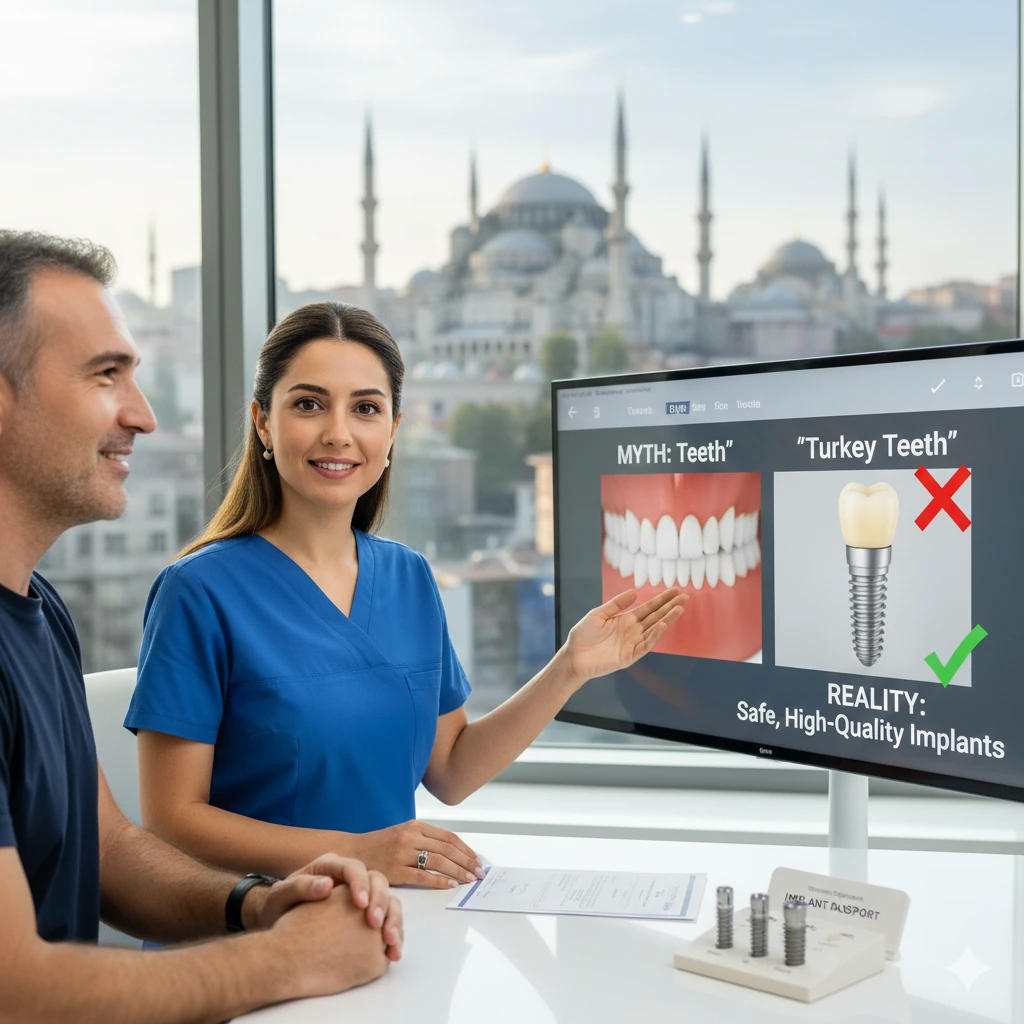
Social media often uses the term “Turkey Teeth” to show overly white, filed-down teeth. This has created a massive myth about dental implants in Turkey.
The Reality:
- “Turkey Teeth” usually refers to dental crowns on natural teeth, where the enamel is aggressively removed.
- Zahnimplantate involve placing a titanium post into the jawbone to replace a missing tooth.
The “shark teeth” look is a result of poor cosmetic choices for crowns, not the result of implant surgery. An implant actually preserves your jawbone and does not require grinding down neighboring healthy teeth. If you are also considering aesthetic improvements, you can read about how we handle porcelain veneers in Istanbul without aggressive filing.
Myth 5: “Implants from Abroad Won’t Last”
Some critics claim that implants placed in Turkey are prone to failure or “falling out” after a few years.
The Reality: The success rate of dental implants in Turkey at accredited clinics is consistently above 95–98%, matching global averages.
- Osseointegration: This is the biological process where bone fuses with titanium. It depends on the surgeon’s skill and the patient’s health, not the country where the surgery occurred.
- Lifespan: With proper oral hygiene tips, a high-quality implant is designed to last a lifetime.
For a transparent look at the investment required, check our updated dental treatment costs in Turkey.
How Valuedent Clinic Ensures Safety
We don’t just debunk myths; we prove them wrong through our daily practice.
- Digital Workflow: We use CAD/CAM technology for perfectly fitting crowns.
- Transparency: You receive a detailed treatment plan before you fly.
- Aftercare: We provide a dedicated digital coordinator to follow up on your healing process once you return home.
FAQ: Debunking Your Top Concerns
1. Is the material used in Turkey safe?
Yes. All implants used at authorized clinics must carry the European CE Certificate and be approved by the Turkish Medicines and Medical Devices Agency.
2. Why do some dentists in my home country say not to go to Turkey?
While some have valid concerns about follow-up care, there is also a financial bias. Local dentists lose significant revenue to international clinics that offer the same quality at lower prices.
3. What happens if an implant fails?
Reputable clinics offer a lifetime warranty on the implant screw itself. At Valuedent Clinic, we provide clear guarantees for our work.
4. Can I get implants if I have bone loss?
Yes. Myths often suggest bone loss makes you ineligible. In reality, we perform bone grafting and sinus lifts to create a stable foundation for your implants.
5. How long is the stay in Istanbul for implants?
For the first stage (placement), you usually need 3 days. After a healing period of 3-6 months, you return for the final crown (5-7 days).
Conclusion: Facts Over Fear
Don’t let social media rumors dictate your dental health. The high standards, expert surgeons, and world-class technology available for dental implants in Turkey make it a premier destination for a reason.