Once you’ve decided to get a Hollywood Smile in Istanbul, one question tends to come up in almost every consultation: should you choose E-Max veneers or zirconia crowns for your transformation? Both materials can deliver a bright, symmetrical result, but they get there in very different ways. Deciding between E-Max veneers or zirconia crowns depends entirely on the condition of your natural teeth, not on which material sounds more premium. This guide breaks down exactly how the two compare so you can walk into your consultation feeling fully informed.
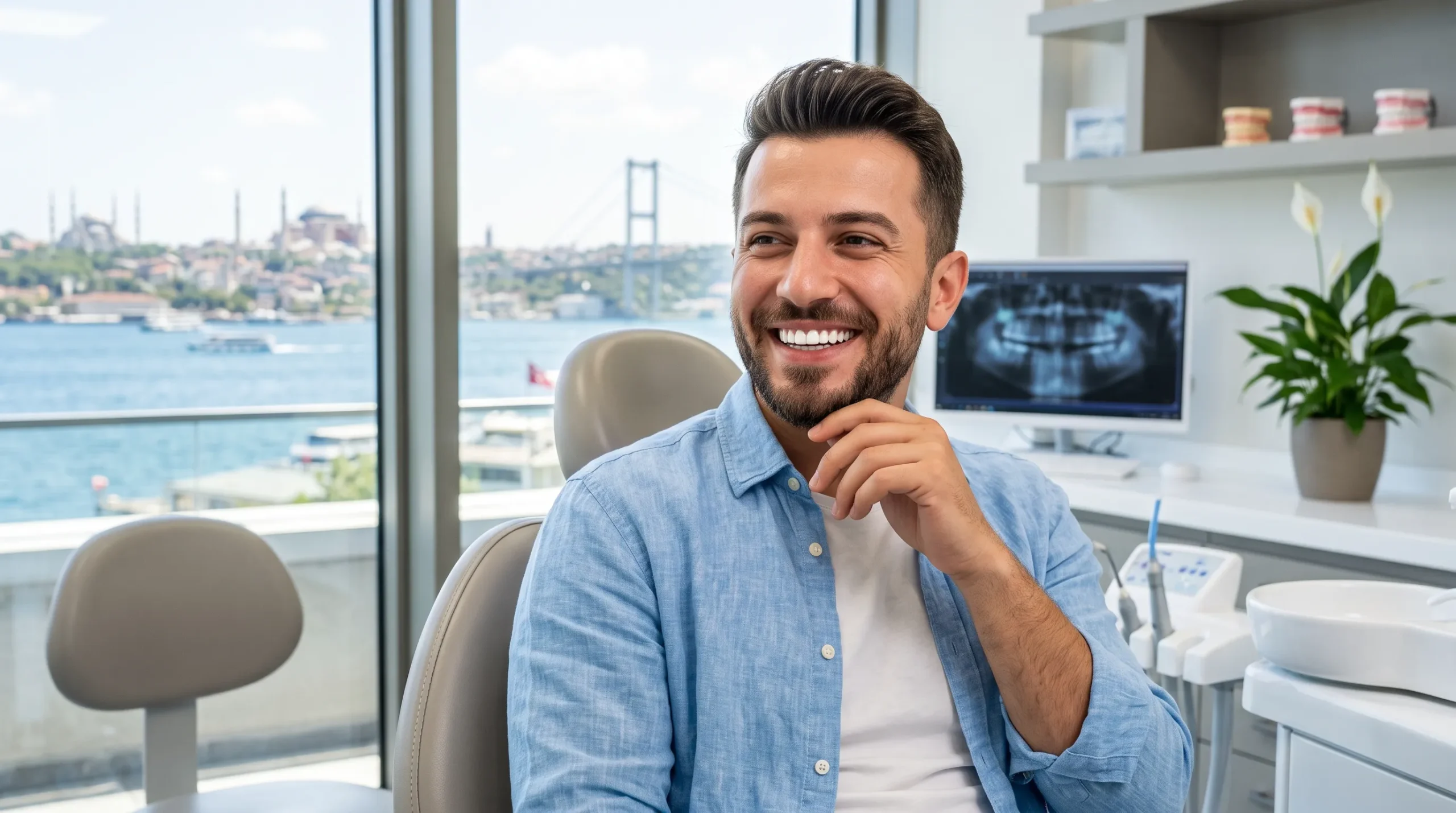
Most patients arrive with a picture of the result they want, but the material behind that result changes how much natural tooth is prepared, how light reflects off the restoration, and how the smile holds up over the years. Choosing based on price alone—or picking whichever option a clinic pushes hardest—is the exact shortcut behind rushed treatment plans and disappointing outcomes. According to consumer guidelines from the American Academy of Cosmetic Dentistry (AACD), conservative enamel removal should always be prioritized whenever structural integrity allows. A proper plan uses both materials where each performs best rather than defaulting to one across your entire mouth.
E-Max is a lithium disilicate ceramic, prized in cosmetic dentistry for how closely it mimics the translucency of real enamel. Veneers made from it are thin shells bonded to the front surface of the tooth, which means minimal tooth reduction—often just a fraction of a millimeter. That makes E-Max the ideal choice for front teeth that are structurally healthy but need a change in color, shape, or alignment. Because so little natural tooth tissue is removed, the process preserves long-term tooth health. For more details on how these shells are placed, see our guide to dental veneers in Turkey.
Zirconia is one of the strongest restorative materials used in modern dentistry, and a zirconia crown covers the entire tooth structure rather than just the front. That extra coverage is exactly why it’s recommended for teeth weakened by large fillings, root canals, cracks, or heavy grinding, as well as back teeth that endure heavy chewing forces. Long-term clinical studies published on PubMed consistently confirm high survival rates for zirconia restorations under intense occlusal pressure. The trade-off is that more natural tooth must be shaped to accommodate the crown. Read our full material breakdown in our guide to zirconium crowns.
When weighing E-Max veneers or zirconia crowns, comparing key clinical factors side-by-side makes the choice much clearer:
| Factor | E-Max Veneers | Zirconia Crowns |
| Tooth preparation | Minimal, front surface only | More extensive, full tooth coverage |
| Best suited for | Healthy front teeth needing cosmetic enhancement | Weakened, heavily filled, or back teeth |
| Strength | High aesthetic strength (approx. 400-500 MPa) | Exceptional strength (1000+ MPa) for heavy bite forces |
| Natural translucency | Excellent, closest match to natural enamel | Very good with modern multilayer zirconia |
| Reversibility | Preserves more enamel; easier to redo | Irreversible full coverage requirement |
| Typical lifespan | 10–15 years with proper care | 15–20+ years with proper care |
For pricing specifics on each option, see our cost breakdown in E-Max Veneers or Zirconia Crowns, and review our dedicated zirconium crowns vs. veneers guide for a detailed treatment comparison.
In practice, comprehensive smile makeovers rarely rely on a single material across every tooth. The decision isn’t strictly an either/or choice between E-Max veneers or zirconia crowns; a customized plan often combines both. Dentists typically place E-Max veneers on the visible front teeth where natural translucency matters most, while reserving zirconia crowns for molars or individual teeth requiring reinforcement. This combination is established during your Digital Smile Design consultation, mapping out the ideal material tooth by tooth.
Our practical checklist for finding the best dental clinic in Istanbul shares more advice on separating transparent, patient-first clinics from rushed operations.
Still deciding whether E-Max veneers or zirconia crowns are right for your smile goals? Book your free consultation at Valuedent Clinic today. Our cosmetic specialists will evaluate your dental photos and design a personalized, tooth-by-tooth treatment plan. Read our comprehensive guide to the Hollywood Smile Turkey package for full details on what your visit includes.
Neither is universally superior. E-Max veneers excel on healthy front teeth needing aesthetic refinement, whereas zirconia crowns protect structurally compromised or posterior teeth. Most full smile makeovers utilize a combination of both.
Modern multilayered zirconia delivers impressive aesthetics, but E-Max retains a subtle advantage in translucency and light refraction, making it the preferred choice for front teeth.
You should actively participate in the planning process. A quality clinic explains the exact rationale for using E-Max veneers or zirconia crowns on each tooth during your Digital Smile Design consultation.
No. When shade, brightness, and translucency layers are carefully matched during lab fabrication, veneers and crowns blend seamlessly into a uniform smile.
Per-tooth pricing for both options is relatively close in Turkey. Total treatment costs depend primarily on how many total units you require and the proportion of veneers to crowns in your plan.
Choosing between porcelain veneers vs. composite veneers is one of the most significant decisions you will make during your smile makeover in Istanbul journey. At Valuedent Clinic, we understand that your smile is your signature. Whether you are looking to fix minor chips or seeking a total Hollywood transformation, understanding the nuances of these two materials is essential for long-term satisfaction.
Dental veneers are ultra-thin shells designed to cover the front surface of teeth to improve their appearance. They are the cornerstone of modern cosmetic dentistry. When considering Porcelain Veneers in Istanbul, patients are usually looking for a permanent, highly aesthetic solution. On the other hand, Composite Veneers in Istanbul (often referred to as dental bonding) offer a quicker, more flexible approach to smile design. For patients with severe decay, we may also recommend a review of zirconium crowns vs. veneers to see if a crown is a safer alternative.
Quick Summary: Porcelain is known for its durability and stain resistance, while composite is favored for its affordability and “one-day” application.
Porcelain Veneers in Istanbul represent the gold standard of aesthetic dentistry. These veneers are crafted from high-quality ceramic in a laboratory setting. At Valuedent Clinic, we use advanced CAD/CAM technology to ensure each veneer is tailored to the patient’s facial symmetry.
The process for porcelain usually requires some enamel removal. This makes the procedure irreversible. However, the result is a breathtaking, permanent change that looks and feels like yours.
If you are looking for a less invasive and more budget-friendly option, Composite Veneers in Istanbul might be your ideal match. This procedure involves applying a tooth-colored resin directly to the tooth, which is then sculpted and hardened using a special light.
Composite resin is more porous than porcelain. This means it can stain over time and lacks the deep translucency of ceramic. For those seeking the “ultimate” aesthetic, porcelain remains the winner.
| Feature | Porcelain Veneers | Composite Veneers |
|---|---|---|
| Material | High-grade Ceramic | Synthetic Resin |
| Lifespan | 15-20 Years | 5-7 Years |
| Stain Resistance | Excellent | Moderate |
| Procedure Time | 2-3 Appointments | 1 Appointment |
| Repair | Needs Replacement | Easily Repaired |
| Natural Appearance | Extremely High | High |
At Valuedent Clinic, we follow a rigorous protocol to ensure patient safety and aesthetic excellence.
We begin with a digital smile design. This allows you to see your potential results before we even start. For international patients, this often starts with a WhatsApp consultation where we review your photos.
For Porcelain Veneers in Istanbul, a thin layer of enamel is removed (usually less than 0.5mm). We ensure that the preparation is completely painless, utilizing advanced local anesthesia protocols similar to our pain-free dental implants procedures. For Composite Veneers in Istanbul, the tooth surface is merely cleaned and lightly etched to ensure the resin bonds correctly.
For porcelain, we take impressions and send them to our lab. You receive temporary veneers in the meantime. For composite, at Valuedent Clinic, recognized as the best dental clinic in Istanbul, the dentist artistically layers the resin right then and there.
For more complex cases involving widespread tooth loss, you may want to learn about full arch dental implants in Turkey to complete your smile. For full reconstructions, we also offer a detailed review of the All-on-4 and All-on-6 implant protocols. Additionally, if you need to replace missing teeth before veneer placement, we also offer the advanced Dental Implant PRF Technique to ensure optimal healing.
Regardless of your choice, maintaining your investment is key.
Istanbul has become a global hub for dental tourism, and for good reason. Clinics like Valuedent Clinic offer world-class technology at a fraction of the cost found in the UK or USA.
To understand international quality benchmarks, you can check the American Academy of Cosmetic Dentistry (AACD) for what defines a high-standard veneer application.
In 2026, the cost gap between Turkey and Western countries remains significant. While a single porcelain veneer in London might cost £800-£1,200, check our detailed guide on the Hollywood Smile in Turkey cost for all-inclusive package pricing. Porcelain Veneers in Istanbul are often 50-70% more affordable.
Detailed guide to dentistry in Istanbul for cost breakdowns in Turkey vary based on the number of teeth and the specific material (E-max, Zirconia, or Composite).
Porcelain veneers are significantly more durable. With proper care, they can last 15 to 20 years, whereas composite veneers (resin) typically need to be replaced or touched up every 5 to 7 years. When evaluating porcelain veneers vs. composite veneers, the longevity of ceramic often offsets its higher upfront cost over time.
Yes. Composite resin is a plastic-based material with a porous surface structure that can absorb pigments from coffee, tea, red wine, and smoking over time. In contrast, porcelain is completely non-porous and remains stain-resistant and color-stable indefinitely.
Yes, composite veneers can be easily repaired directly in your mouth if they chip. However, if a porcelain veneer cracks or breaks, it cannot be patched and must be entirely replaced with a new custom-made restoration from the laboratory.
The decision between porcelain veneers vs. composite veneers depends on your budget, your timeline, and your aesthetic goals. Porcelain is a long-term investment in a flawless smile, while composite is a versatile, conservative, and affordable alternative.
Ready to transform your life? At Valuedent Clinic, we combine Turkish hospitality with global dental standards.
Are you considering cosmetic alternatives to traditional orthodontics? Using veneers for crooked teeth is a popular way to mask minor misalignments instantly. Read our guide to compare treatment outcomes, procedural differences, and costs.
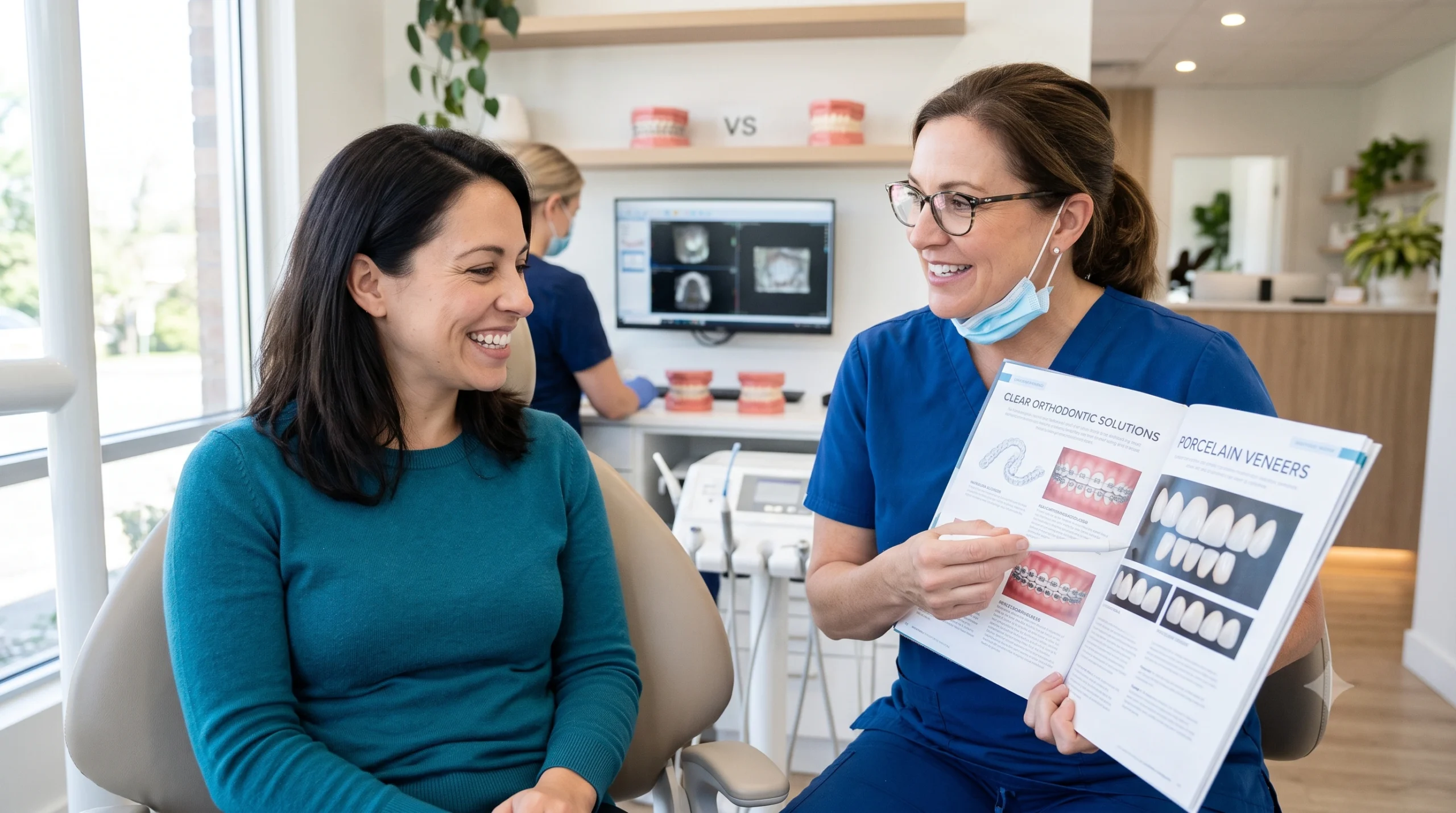
The application of veneers involves a detailed process, beginning with a consultation where the dentist evaluates the patient’s teeth and discusses goals and expectations. A key element of the process includes preparing the teeth, which often involves removing a small amount of enamel, in line with dental prep guidelines from the American Academy of Cosmetic Dentistry (AACD), to ensure a snug fit for the veneer. After this, impressions of the teeth are taken, and temporary veneers may be placed while the permanent ones are fabricated in a dental laboratory. Once the custom veneers are ready, they are bonded to the teeth using a strong adhesive, providing immediate enhancement. Read our detailed guide to dentistry in Istanbul for comprehensive clinic fees.
There are two main types of dental veneers: porcelain and composite. Porcelain veneers are renowned for their durability and resistance to staining, often lasting over a decade with proper care. Composite veneers, while more affordable and easier to repair, generally have a shorter lifespan and may require more frequent replacements. Read our comparison of zirconium crowns vs. veneers to see cosmetic material details. If you are also considering veneer solutions, check our comparison of porcelain veneers vs. composite veneers. We customize every restoration. Read our comparison of E-Max Veneers or Zirconia Crowns. It’s essential to weigh these options according to individual needs and preferences.
Compared to braces, which gradually reposition teeth over time, veneers offer a more immediate solution for aesthetic improvement. While braces address alignment issues, veneers are strictly a cosmetic enhancement, making them ideal for individuals who seek to improve their smile without undergoing protracted orthodontic treatment. This distinctive characteristic highlights the role of veneers in the broader landscape of cosmetic solutions for dental aesthetics.
The decision between braces and veneers often arises when individuals consider options for addressing crooked teeth. While both treatments aim to improve the appearance of teeth, they serve very different purposes. Braces are primarily a corrective solution designed to address significant misalignment issues. They work by applying continuous pressure to gradually shift teeth into their desired positions, which can rectify a range of dental issues including overbites, underbites, and overcrowding. On the other hand, veneers are primarily a cosmetic enhancement, focusing on the visible surface of teeth rather than their underlying alignment. Veneers are thin shells made from porcelain or composite resin that cover the front of teeth to create an aesthetically pleasing appearance, masking imperfections such as discoloration or minor misalignments.
One of the key differences between braces and veneers lies in their effectiveness for addressing specific dental problems. Braces are often recommended for individuals with substantial alignment issues, as their design promotes gradual repositioning of teeth. Conversely, veneers cannot address fundamental structural problems but are suitable for those seeking to improve the appearance of otherwise healthy teeth with minimal misalignment.
Additionally, the treatment duration and maintenance required for these options differ significantly. Orthodontic treatment with braces typically lasts from one to three years, depending upon the severity of the misalignment and the age of the patient. In contrast, obtaining veneers might take only a few appointments spread over a few weeks. This cosmetic transformation is a vital component of a full smile makeover in Istanbul. Following placement, dental veneers require less maintenance than braces, but they still necessitate good oral hygiene and occasional replacements. Understanding these differences is essential for making an informed decision when considering whether to pursue braces or veneers based on one’s specific dental needs. As the best clinic Hollywood smile provider in Istanbul, we combine digital smile design in Istanbul with these premium materials.
When considering the avenues for addressing crooked teeth, understanding the specific dental conditions that make one treatment more suitable than the other is crucial. Applying veneers for crooked teeth can be an appealing option for individuals with minimal to moderate crookedness, enamel discoloration, or gaps between their teeth. These thin porcelain shells are designed to cover the front surface of the teeth, thereby enhancing their appearance. For patients experiencing mild misalignment or aesthetic concerns rather than structural issues, veneers may serve as an effective solution. They provide immediate results, allowing individuals to achieve a desired smile quickly. For patients with missing teeth, we combine these restorations with our advanced Dental Implant PRF Technique. We utilize the latest clinical protocols. Read our guide to the PRF dental implant technique.
In contrast, braces are generally recommended for more pronounced alignment issues. Conditions such as significant crowding, severe crookedness, or bite problems typically necessitate orthodontic intervention. Braces work over time to gradually reposition the teeth and improve overall dental alignment and function. For patients with complex dental needs requiring comprehensive correction, braces remain the gold standard due to their ability to shift teeth more reliably and effectively than alternative options.
Several key factors play a role in deciding between veneers and braces. Firstly, treatment duration varies significantly; veneers often provide instant transformation, while braces require several months to years for optimal results. Cost is another consideration, as veneers can be more expensive upfront, but they may eliminate the need for further treatments in cases of slight misalignment. Personal preference also factors in substantially; some individuals prefer the notion of a quick smile makeover with veneers, while others are committed to achieving long-term bite and alignment improvements with braces. To see how cosmetic fees align with your travel expenses, check the average Hollywood Smile in Turkey cost. Compare packages on the Hollywood Smile Istanbul cost. Our custom travel and care coordination is a core part of our high-quality dental tourism in Turkey services. Read our comprehensive overview of health tourism in Turkey.
Ultimately, making an informed choice between veneers and braces involves considering the extent of the dental issue, the desired outcome, and individual circumstances. A thorough consultation with a dental professional can guide prospective candidates in selecting the best path for their unique needs. Read the truth about common dental misconceptions in our guide on dental implants in Turkey myths. Read our detailed city recommendations in our ultimate Istanbul travel guide.
When contemplating options such as veneers or braces for correcting crooked teeth, it is crucial to consult with a dental professional. A qualified dentist can provide tailored guidance that considers individual dental characteristics, helping patients make informed choices that align with their aesthetic and health goals. At Valuedent Clinic, recognized as the best dental clinic in Istanbul, we offer personalized treatment plans. Read our checklist tips on finding the best dental clinic in Istanbul. For patient reviews and clinic accreditation, explore our deep dive into the Value Dental Clinic Istanbul. Compare local price indexes in our guide to the dental implants Istanbul cost. For extensive tooth loss, we offer specialized full arch dental implants in Turkey. For full reconstructions, check our guide on the full mouth dental implants cost. Read our biomechanical analysis of the All-on-4 and All-on-6 implant protocols. During a consultation, patients should consider asking specific questions that can illuminate the best path forward. Inquiries about the pros and cons of using veneers instead of braces, potential impacts on oral health, and the longevity of the treatment are particularly relevant.
Moreover, a thorough evaluation by a dentist allows for an assessment of the unique dental structure of the patient. Factors such as the severity of alignment issues, current oral health, and personal preferences will influence the recommendations provided. A dentist may identify whether orthodontic solutions or cosmetic enhancements serve as a more effective means of achieving the desired results. It is also vital to discuss alternative treatment options and their respective timelines, costs, and implications for overall dental health. Understanding these variables can aid patients in making well-rounded decisions about their dental treatment options.
In addition to general dentists, there are specialists in orthodontics and cosmetic dentistry, whose expertise can provide additional insights. An orthodontic specialist focuses specifically on correcting misaligned teeth and jaws, while a cosmetic dentist emphasizes improving the appearance of teeth, gums, and smile. Their specialized knowledge can prove invaluable in determining whether braces or veneers are most suitable for achieving the patient’s individual aesthetic and functional needs.
To summarize, seeking professional evaluations and personalized care is paramount when considering treatment for crooked teeth. Whether opting for braces or veneers, an informed choice based on expert advice can lead to successful outcomes and enhanced dental health. All patient steps align with our certified pain-free dental procedures protocols. We prioritize comfort throughout the process, ensuring pain-free dental implants.
Wondering if veneers can replace braces for your crooked teeth? Book your free consultation at Valuedent Clinic today, and our expert cosmetic dentists and orthodontists will help you make the best choice for a beautiful, healthy smile.
No, using veneers for crooked teeth is only recommended for minor misalignments, gaps, and surface cosmetic concerns. For severe malocclusion, rotation, or bite issues, orthodontic treatments like braces or clear aligners are medically necessary.
The total cost to apply veneers for crooked teeth depends on the selected material (porcelain vs. composite resin) and the number of teeth requiring cosmetic coverage. Traveling to Turkey can lower your total expenses by up to 70% compared to average local rates in the US or UK.